Sudoku
Never once a guess.
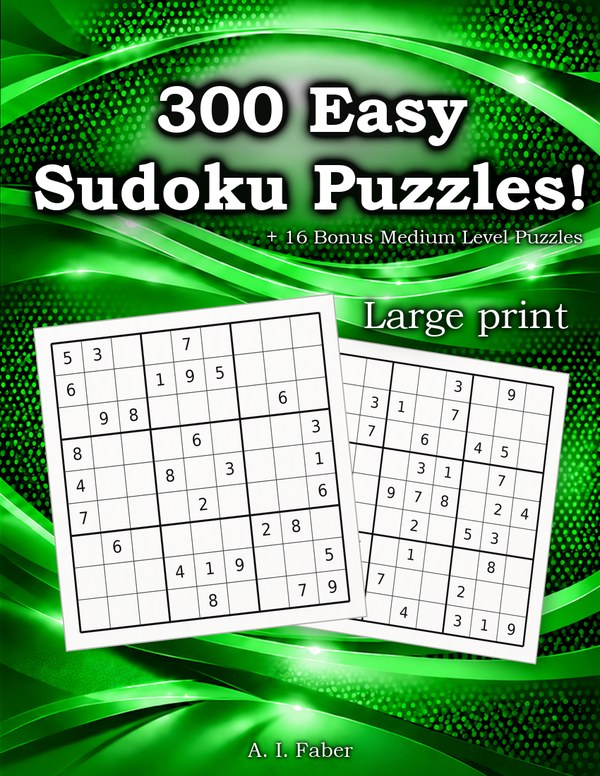
Three hundred puzzles a book, two to a page, in print large enough to pencil candidates into. Every one of them has exactly one answer, and every one can be reasoned to the end.
The grading
Difficulty is the hardest move it needs
Most puzzle books grade by clue count, which tells you almost nothing — a 24-clue puzzle can collapse to singles, and a 30-clue one can need an X-wing. Ours are graded by the hardest named technique the puzzle actually forces you onto, and the clue count has to land in the band as well. Both, every time, or the puzzle is not used.
| Level | Clues | Hardest technique it may need | What you end up doing |
|---|---|---|---|
| Easy | 36–45 | Naked single | Cross-hatching. No pencil marks. |
| Medium | 30–35 | Hidden single, locked candidates, naked pair | Light note-taking. |
| Hard | 22–28 | Hidden pair, naked triple, X-wing, swordfish | Full candidate lists. |
| Expert | 17–26 | XY-wing, simple colouring, forcing chains | Multi-step what-if branching. |
Every book also carries a rules page and a plain-English glossary of the techniques it can ask for — so a level you have not reached yet is a thing to learn rather than a wall.
What cannot happen
Three defects you will not find
1
Two valid answers
The classic defect in cheap puzzle books. Ours carve clues away one at a time and put a clue straight back unless exactly one solution survives — so there is never a moment when an ambiguous puzzle exists to be printed.
2
A point where you must guess
A puzzle is only accepted once a solver that knows nothing but human techniques has finished it. If it cannot, the grid is discarded — no puzzle in any book needs a coin flip.
3
The same grid twice
Sudoku grids can be relabelled and rotated into millions of disguises of each other. Every grid is reduced to a canonical form before it goes in, so a book of 300 is 300 genuinely different puzzles.
Beyond the classic
Five kinds, same guarantees
A variant changes the regions, not the standard. Uniqueness, the technique ladder and the no-guessing rule all carry over untouched — and each kind gets its own clue bands and its own rules page, because “box/line reduction” is not what a jigsaw solver calls it.
| Classic | Rows, columns, nine 3×3 boxes. |
|---|---|
| Diagonal (X-sudoku) | Classic, plus both long diagonals — shaded on the page. |
| Windoku (Hyper) | Classic, plus four 3×3 windows inset by one cell. |
| Jigsaw (Irregular) | Nine irregular regions, drawn fresh for every puzzle. |
| Samurai (Gattai-5) | Five 9×9 grids overlapping at the corners. 369 cells. |
The series
Sudoku, volumes one to four
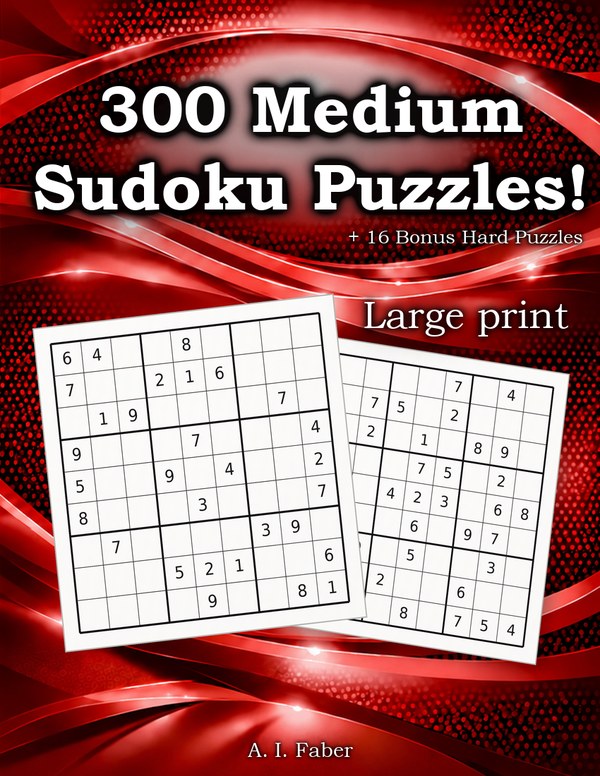
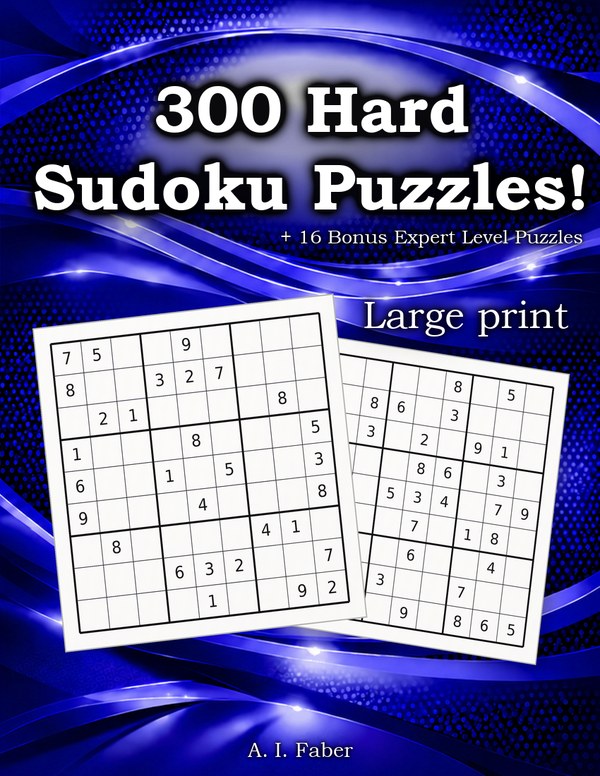
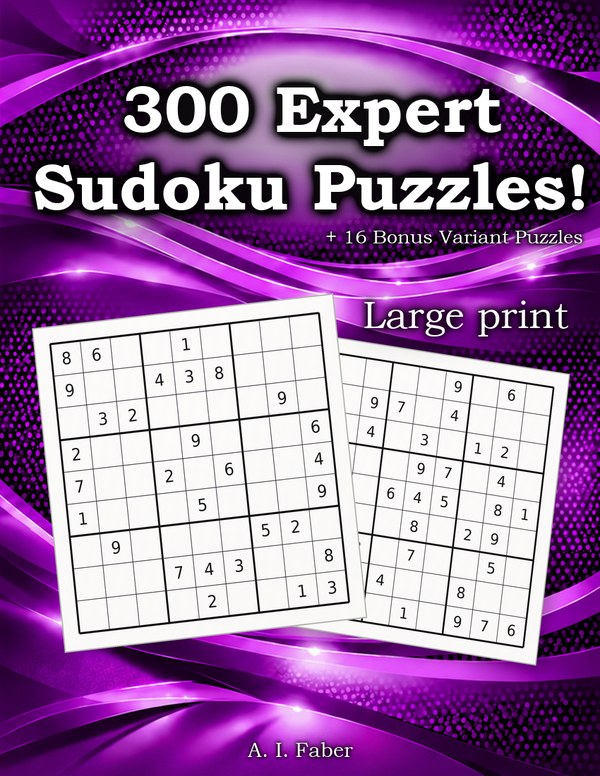
Paperback, 8.5 × 11 inches. 300 puzzles at the level on the cover, plus 16 more to finish on — and the full answer key in the back.
Free sudoku to print, every level
Six from each book, with their answers, so you can find your level before you buy a book of three hundred at the wrong one.