Drawn to fit the crayon.
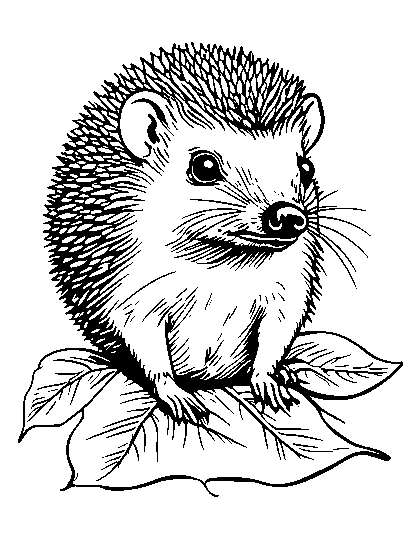
A coloring page fails in one specific way: an area too narrow for the tool in the child’s hand. It cannot be coloured in, only scribbled over. So every area on every page is measured against the actual tool before the page is allowed into a book.
A measurement, not an adjective
“Simple” and “intricate” mean nothing on a cover. What matters is whether the tool physically fits inside each area. A standard crayon is about 8 mm across, so an area narrower than that cannot be coloured inside — and counting how many areas a page has does not tell you that.
| Band | Tool it is drawn for | Line weight | Areas to fill |
|---|---|---|---|
| Ages 2–4 | Jumbo crayon, 12 mm | Very thick | 3–10 |
| Ages 5–7 | Crayon, 8 mm | Thick | 6–24 |
| Ages 8–12 | Pencil, 3 mm | Medium | 15–55 |
| Adult | Fineliner, 1 mm | Fine | 40–1000 |
Each area’s largest inscribed circle is measured against the band’s tool at the size the page will actually print — so a tall drawing is judged as the tall drawing it will be on paper, not as an abstract shape.
Nothing leaks out of the lines
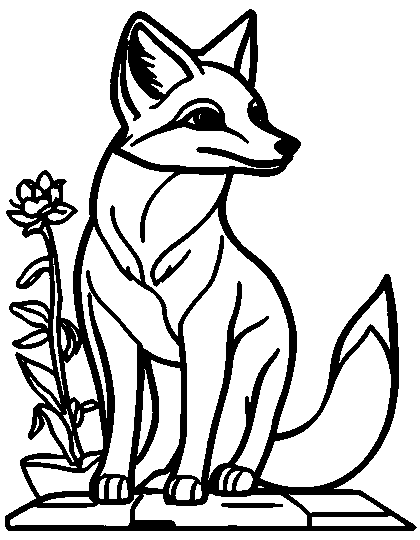
Every outline on a page has to close. An open line is invisible on paper right up until a child fills a region and the colour runs off into the sky — and by then the page is spoiled.
So every page is checked for sealed regions before it goes in a book. You can see the check for yourself: the coloring demo on the home page is a real page, filled with a real paint bucket, and the colour stops at the line every time.
Twenty quiet minutes that leave something behind
Every page carries true facts about what is on it, pitched at the age the book is for. Reading age moves much faster than drawing complexity, so the words are calibrated separately from the lines.
| Band | Facts a page | Words each | How they read |
|---|---|---|---|
| Ages 2–4 | 1 | ~8 | Read aloud by an adult. No numbers. |
| Ages 5–7 | 2 | ~14 | Sizes compared to everyday things. |
| Ages 8–12 | 3 | ~22 | Real figures and proper names. |
| Adult | 3 | ~28 | Non-obvious, and precise about it. |
A wrong fact gets memorised
Which is why accuracy is the binding constraint, not a nice extra. Only well-established, checkable facts go in — no invented figures, no unverifiable superlatives, nothing frightening — and a person reads every one before a book is printed.
Typeset, never drawn in
The words are set into the page as type, not drawn into the picture. Words baked into artwork come out misspelled, malformed, sometimes mirrored — and stay that way forever. Typeset words stay correct, and stay legible.
Why the fox looks like a fox
Each subject starts with reference photographs — several of them, picked on purpose, because one photo of a red fox is one pose of one animal. From them comes a written description of the animal: its build, its proportions, its markings. Every drawing has to answer to that description, and is held against it before it goes near a book.
No photograph is ever traced, and that matters twice over. A page taken pixel-wise off a photographer’s shot is a derivative work, which becomes a real problem the moment a book is sold. And photographs drag fur texture, shadow, grass and blur along with them — line art wants none of it.
What the research buys is accuracy: a border collie rather than a generic dog, and twenty different poses rather than the same animal twenty times. Every book lists what was consulted.
Printed like someone means to use it
Single-sided
A real gutter
Pure black on white
The first coloring titles are being set now
The sample pack has two finished pages in it — one for small hands, one for a steady one — so you can put them through a printer and see how they take a crayon before anything ships.